 Issue 04 · September 2026
TheSignal.
The Right Place for a Standard
A successful property-wide system needs to balance consistency with flexibility. Standardizing how users access, control, and interact with the system creates a familiar experience across the property and makes ongoing support much easier.
At the same time, every space has different requirements, hardware, and operational needs. The goal is to maintain a common operating standard while allowing each area to adapt without becoming a completely different system to learn and manage.
In short, the platform should be consistent where it matters and flexible where it needs to be—making it easier to operate today and easier to evolve over time.
You’ll see that principle throughout this issue: a major remodel joins an operation already in place, a map aligns with the person using it, and field teams bring very different spaces online without inventing a different operating method for each one.
That is the right place for a standard: stable enough to support the property, flexible enough to move with it.
Here’s what that balance looks like in practice.
Mike Epstein
CEO, LUCI Systems
It’s been a busy month for LUCI!
From Lewiston to Ponca City to Las Vegas, our teams have been clearing racks, installing LED displays, bringing systems online, and training the people who will run them.
-
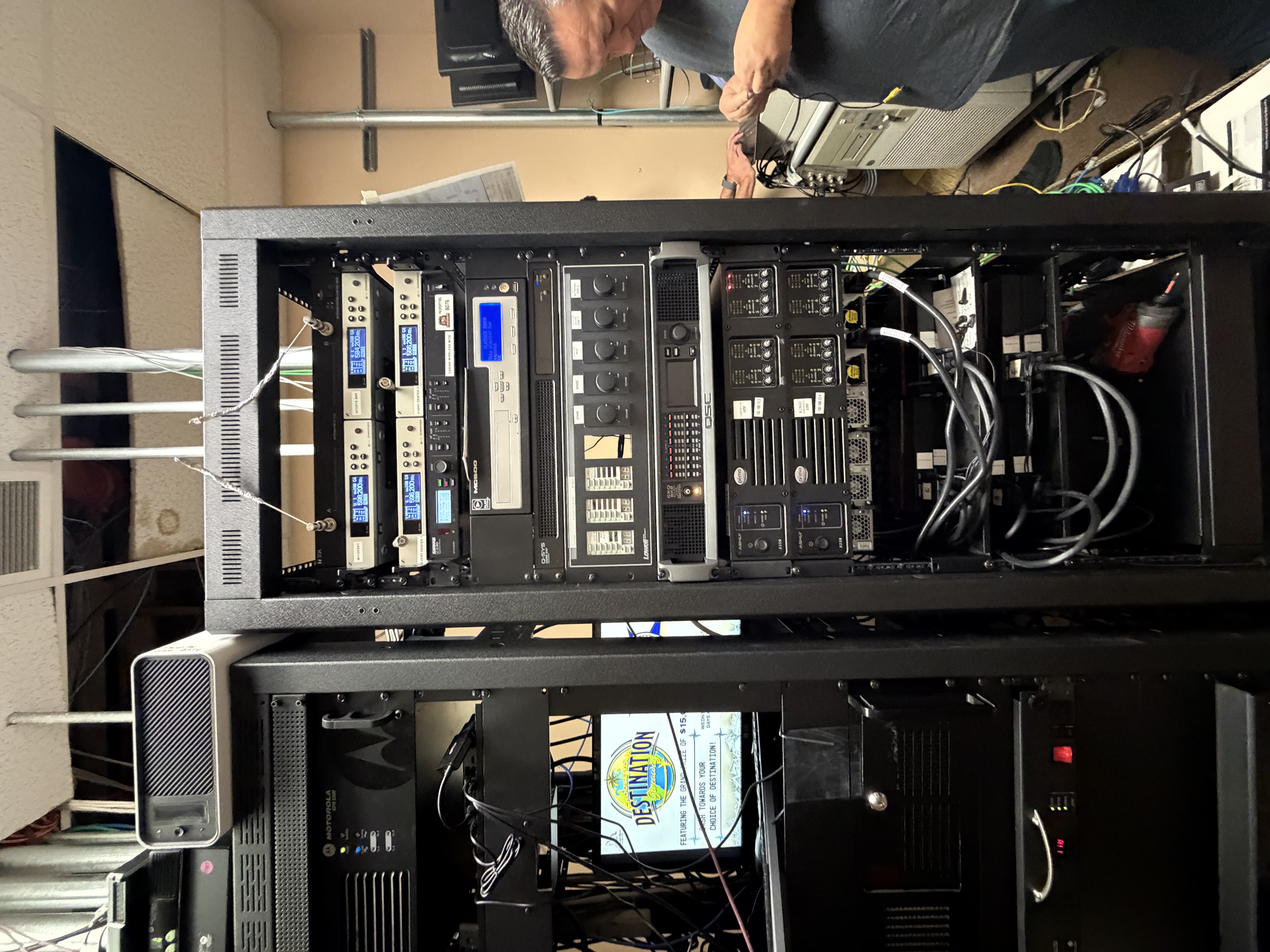 Clearwater River Casino & Lodge Lewiston, Idaho Live · August 24
The team cleared out equipment and cabling that no longer needed to stay before the property went live.
-
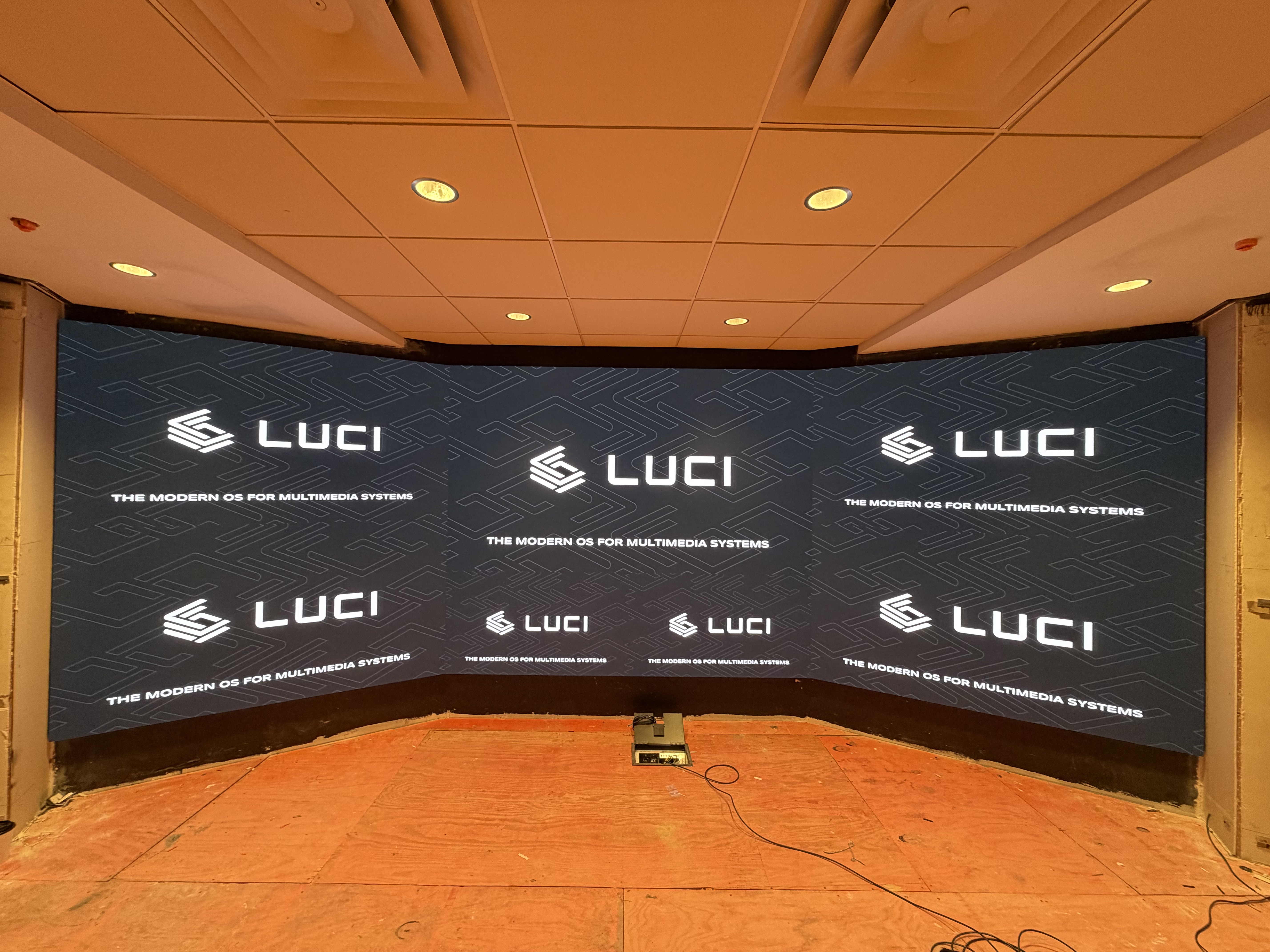 Swigs at Osage Casino Hotel Ponca City, Oklahoma Live · August 20
Ponca City was already running on LUCI as part of an enterprise standardized across six properties. Phase one brought the restaurant and casino’s expanded audio and video, including a new LED, into the existing operation; phase two added Swigs Stage’s video wall, performance PA, background music, and TV audio.
-
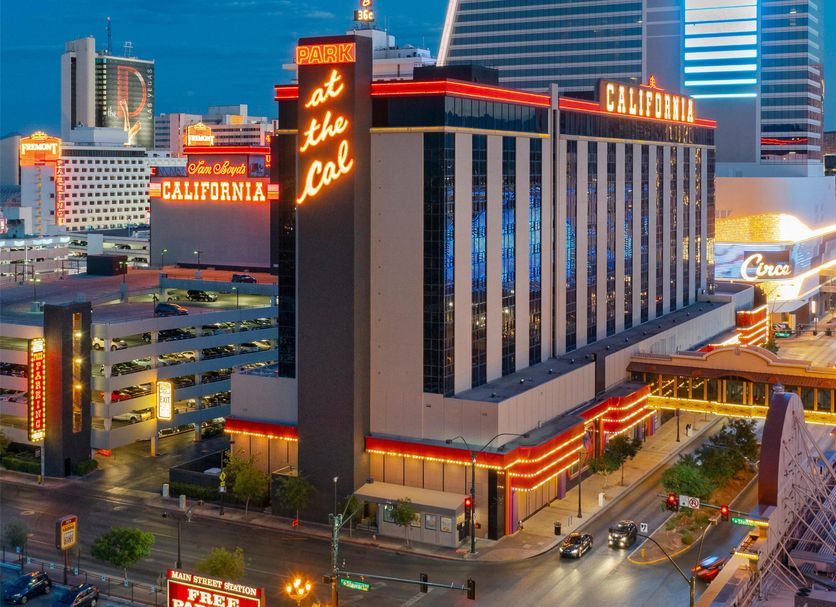 California Casino Las Vegas, Nevada
The crew rebuilt the sportsbook rack, brought the displays online, and trained the property team before heading out.
Those were the quick stops. At Aliante, the work opened onto a much larger canvas. That’s the next story.
2,000 square feet of game-day impact
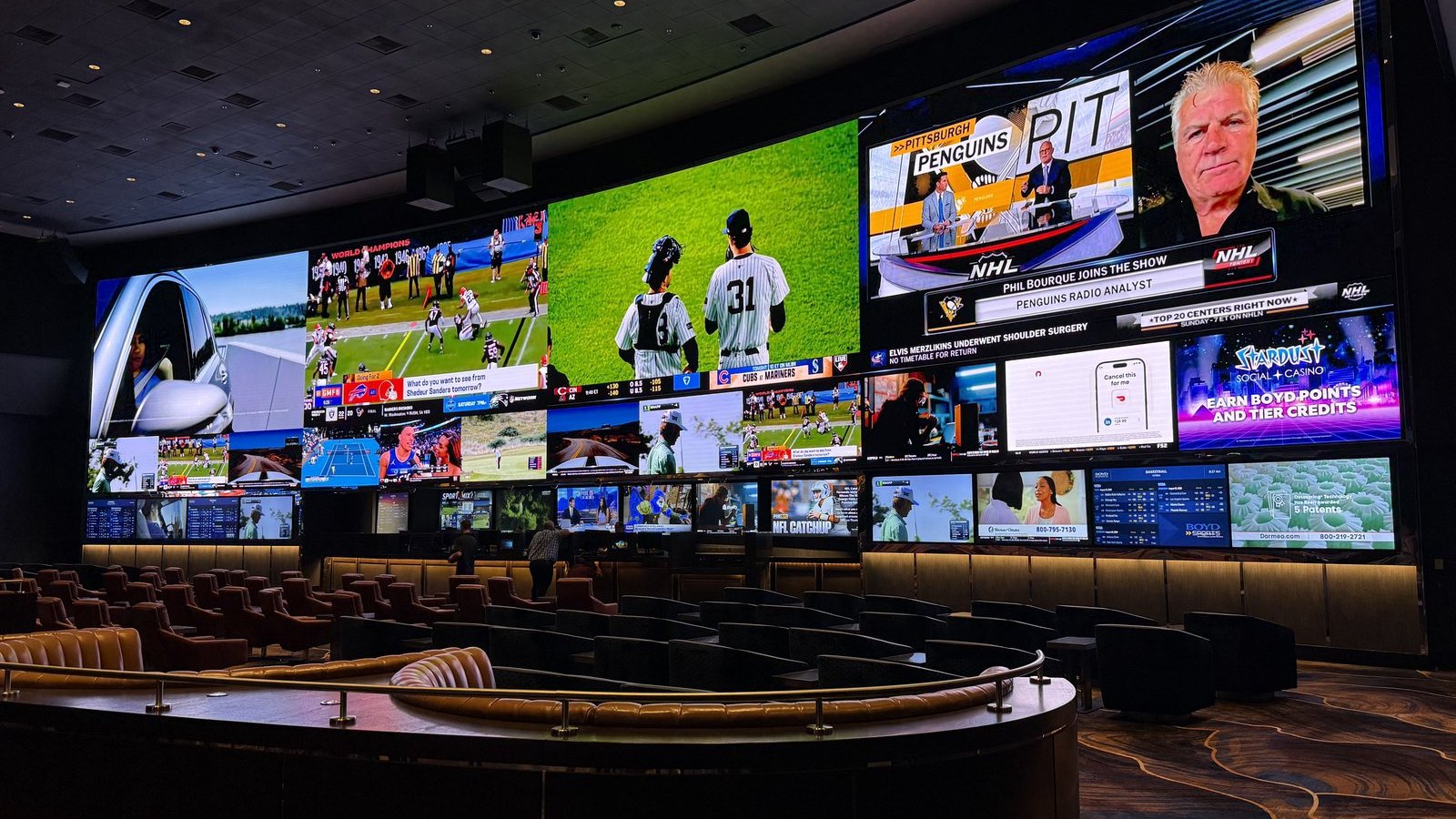
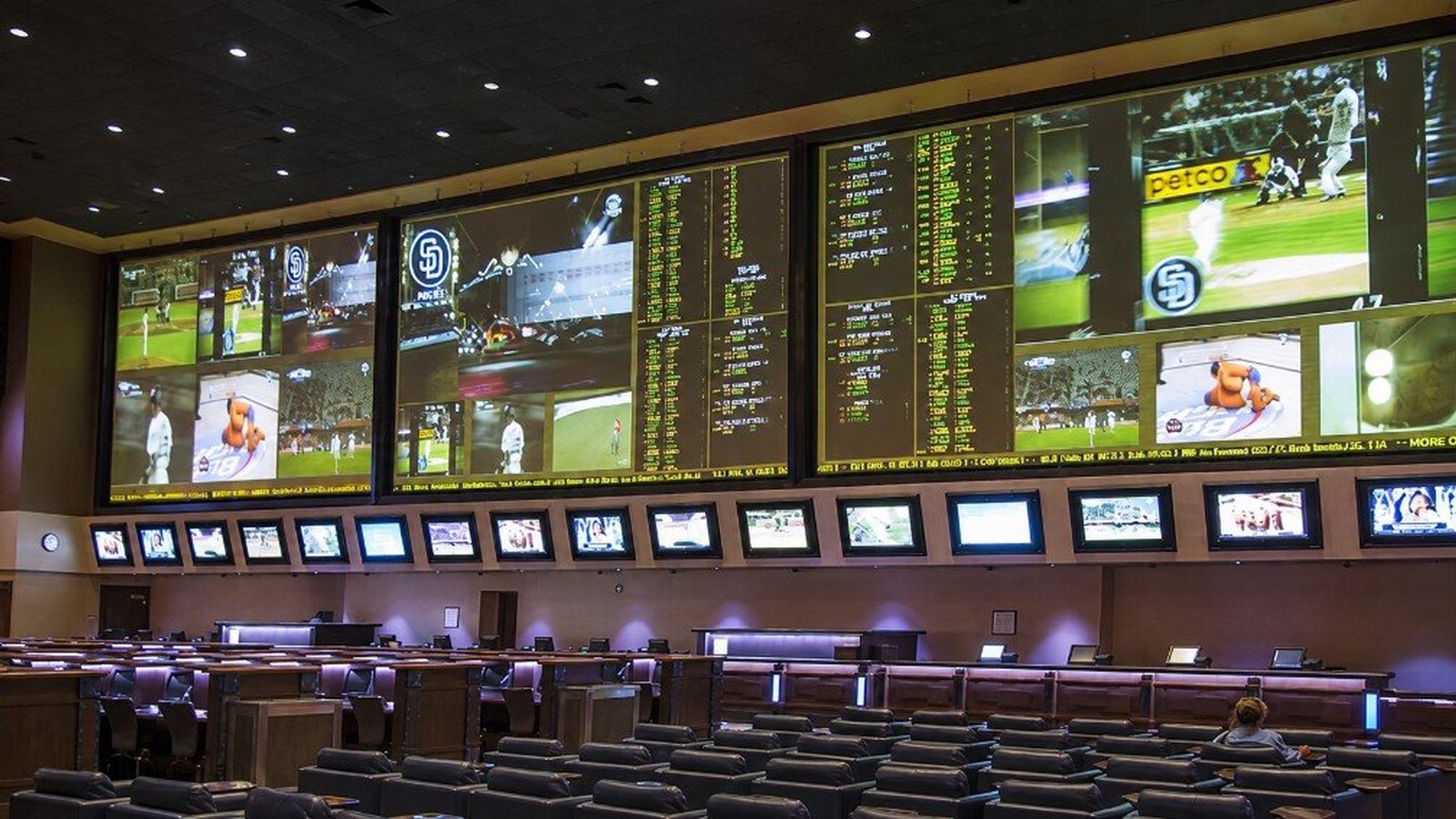
Aliante’s sportsbook remodel centered on a 106’ x 20’ curved LED wall. LUCI built the wall, rebuilt the bar ticker, and brought the whole room onto the platform already running the rest of the property.
Aliante Casino + Hotel + Spa Las Vegas, Nevada
A 106’ x 20’ curved LED wall — 2,000 square feet of unbroken video across the sportsbook.
The next chapter for a proven destination
Aliante had operated the sportsbook on a projector-based display system for years. The remodel opened a much larger, more flexible canvas for live sports, racing, and odds—and because LUCI was already orchestrating audio, video, and signage across the property, the new room joined the same interface and operating standard already in use throughout Aliante.
Building the 106’ x 20’ centerpiece
LUCI’s team built and installed the 106’ x 20’ curved LED wall. On a wall this size, the curve had to be exact: even a small variation can keep an LED tile from seating correctly or leave a visible gap. The team adjusted each section of the mounting structure to hold the intended curve, so every tile sat flush across the full span.
Behind the wall, fifteen racks of legacy gear came out and were replaced by just two LUCI racks. More than twenty projectors came down. LUCI also rebuilt the continuous odds ticker around the sportsbook bar, bringing the main wall, the ticker, video sources, and audio onto the same platform already operating throughout Aliante.
Operating the wall
The operator starts by choosing from six wall configurations, each designed for a different mix of events. Tap a box in the interface, select the game, race, or channel that belongs there, and LUCI sends it to that section of the wall.
Audio is controlled by section as well, so the team can make one event the focus without changing the rest of the room. The wall can move from a single marquee event to a full slate of simultaneous games without a separate workflow or control system.
What Aliante runs now
Aliante on LUCI to Date
- 266Displays
- 2+1LED walls + ticker
- 89Audio zones
- 92DTV channels
- 98Signage endpoints
- 7+Technologies orchestrated
One LUCI platform
Every endpoint, every zone, every wall, every channel — one interface.
There’s more to this one — the build, the rack consolidation, and how the room runs day to day.
Read the full Aliante case studyMake Every Endpoint Easier to Find — and Easier to Service
Device numbers may identify an endpoint, but they do not help you orient yourself to what you are looking at or where it sits in the room.
A clear name, location, or other recognizable cue tells you exactly where it is. Add that context to the endpoint name, then leave a note that will help you—or the next person—find and service it later.
Open the mode menu and choose Endpoint Mode.
Select the endpoint marker you want to update. The Edit Endpoint panel opens.
Replace Name with a clear location-based label.
Add useful service context in Notes, then select Save.
The name helps your operators find the right screen. The note helps the next person find the screen in the room and understand what they are walking into.
Support: Endpoint setup walkthrough in the Customer Support Portal.
A Map That Faces the Way You Do
Last issue, we introduced the new LUCI map and showed how properties and endpoints can appear in their real locations. Now let’s look at how the map adapts to your point of view.
Today, north is always up. In New LUCI, west, east, south, or any direction in between can be up, depending on where you are standing and the direction you are facing.
If you’re standing behind the bar looking across the floor, the map can face the same direction. Left on the screen is left in the room. The display in front of you appears in front of you — without asking you to mentally rotate the property before acting.
It sounds like a small adjustment, but in a room full of screens, zones, and people waiting for the next event, it removes one more translation between you and the space.
Over the next few months, we’ll share more of the features taking shape as New LUCI moves through beta and toward release.
Put LUCI to Work Across Every Team
Every team sees the property through a different set of responsibilities. The best place to start is with the work each one already owns.
We created the Field Activation Guide to help each member of your team put LUCI to work in their part of the property.
The guide organizes practical use cases by role: Marketing, Gaming, A/V & Facilities, IT, Finance, and General Management. Each section gives that team a focused place to start and an action it can put to work now.
Choose your team, or read across the guide to see how the property can operate as one coordinated organization.
Start with the role closest to your work, then read across the others when a task reaches beyond your team. You do not need to take on every use case at once; choose one next step that fits the way your team works today.
Standardize the Operation, Not the Hardware
Change the equipment without changing the way your property operates.

Years ago, I was asked to develop a strategy that could standardize technology across a group of properties. The problem was not only that every property had different equipment. Programmers came and went. Products were discontinued. Properties were left stuck with systems that became harder and more expensive to support.
That is what I mean by another control project. A screen, player, or processor reaches the end of its life, and suddenly the property is paying for new programming, a new interface, new training, and a new dependency on whoever built it. The hardware changed, but the property had to rebuild the operation around it.
When we developed LUCI, we put the standard in the protocols technology uses to communicate and in the operating rules the property team uses every day — not in a prescribed list of boxes. That lets the operation stay consistent across properties even when the equipment does not.
We are agnostic about the hardware that fits the room, the job, and the budget. We know what works well, and we will make recommendations. Then the property decides. We are not a this-way-or-no-way company.
The hardware still matters to the job it performs. It just should not dictate the operation. Pigeonholing a property into one manufacturer is expensive and wasteful, especially when useful equipment has to be removed simply because it does not fit somebody else’s standard.
We developed the solution around the protocols of technology, not the hardware of technology.
Screens, sources, and processors will change. The people running them should not have to change their method every time. That is the standard: consistent names, controls, schedules, and support across the property, with room to choose the hardware that fits.
Need a hand?
Guides, troubleshooting, and ticket submission live in the Customer Support Portal.
Same LUCI team, same LUCI engineers. Just another way in.